
From the Blog
Event Transportation Coordination That Runs on Time
Event transportation coordination for Chicago gatherings means matching vehicles, routes, timing, and guest needs before the first pickup begins smoothly.
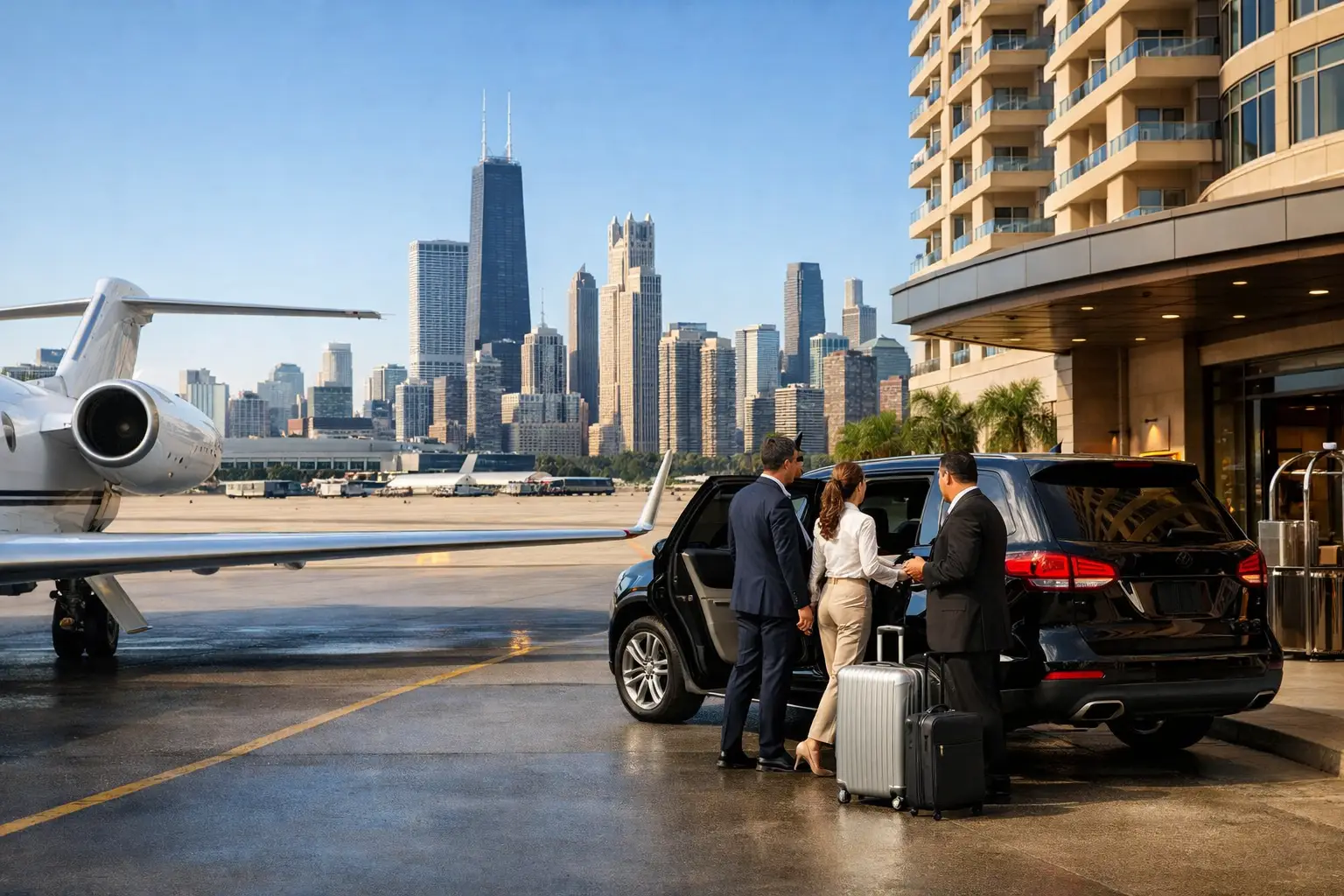
A gala can begin at 7:00 p.m. and still feel behind schedule by 6:40 if executives are circling for a drop-off, family members are waiting at separate hotels, or a Sprinter arrives without room for formalwear and luggage. Event transportation coordination prevents those failures before the first chauffeur is dispatched. It turns a collection of guests, addresses, schedules, and vehicles into a composed arrival experience.
For corporate programs, weddings, stadium suites, private dinners, and airport-connected gatherings, transportation is not simply about reserving a car. It is about controlling the moments when timing matters most: an executive arriving from O'Hare, a wedding party moving between locations, or a group leaving a Chicago venue at the same time after a long evening.
Start Event Transportation Coordination With the Guest Flow
The most useful first question is not, “What vehicle do we need?” It is, “How will people move through the event?” A transportation plan should follow the actual guest experience from pickup through final departure.
Begin with the fixed points: arrival windows, venue access rules, ceremony or meeting start times, flight details, meal service, and scheduled departures. Then identify the variables. These may include guests arriving on different flights, attendees staying at more than one hotel, an uncertain end time, mobility needs, luggage, or a host who needs a private vehicle available throughout the program.
A well-built itinerary accounts for both. For example, a corporate dinner in downtown Chicago may require airport transfers during the afternoon, executive sedans for speakers, SUVs for senior leadership, and later departures grouped by hotel. A wedding in Naperville or Oak Brook may call for separate transportation for the couple, wedding party, family members, and out-of-town guests. Treating every trip as a separate reservation can create gaps. Coordinating the full movement plan makes those handoffs intentional.
Match the Vehicle to the Assignment, Not Just the Passenger Count
Passenger count is essential, but it is only one part of vehicle selection. Luggage, attire, route length, privacy expectations, accessibility considerations, and the role each guest plays in the event should guide the decision.
An executive sedan is often the refined choice for one or two business travelers who need a quiet airport transfer or private arrival. Full-size SUVs, including Cadillac Escalade ESVs and Lincoln Navigator Ls, suit guests who need additional space, travel with luggage, or prefer a more substantial arrival. The BMW 740i xDrive provides an elevated executive experience when presentation and comfort are central to the assignment.
For small groups, Mercedes-Benz Sprinter vans give attendees room to travel together without separating a party into multiple cars. Stretch limousines may be appropriate for celebrations when the ride is part of the occasion. Executive minibuses are designed for larger coordinated movements, allowing a group of up to 30 passengers to arrive and depart together when the itinerary supports it.
Capacity should always be confirmed with real-world details. Six passengers with carry-on bags have different needs than six passengers with checked luggage, golf clubs, garment bags, floral arrangements, or production equipment. A thoughtful coordinator asks for the luggage count and any oversized items before assigning a vehicle. It is a small step that protects guest comfort and prevents a last-minute second vehicle.
Build in Time for Chicago Conditions
A route that looks simple on a map can change quickly around a major convention, rush-hour traffic, a road closure, a sporting event, or weather. The answer is not automatically to schedule pickups excessively early. It is to set realistic windows, use local operating knowledge, and give guests instructions that reduce curbside confusion.
For a group departure, establish a ready time that is earlier than the vehicle pull-away time. Guests need time to exit a ballroom, collect coats, find the correct door, and board. This matters particularly at large hotels and venues where several events may be releasing at once. A five-minute delay from one guest can become a 20-minute delay for an entire motorcoach-style movement.
Airport-connected events deserve additional attention. Flight information lets dispatch monitor arrivals and adjust for delays, but guests should still know what happens after landing. Provide the chauffeur's contact process, the meeting location, and whether a Meet & Greet is arranged. At O'Hare and Midway, clear instructions are often more valuable than another reminder about the event schedule.
Give Every Guest One Clear Instruction
The strongest transportation plans are detailed behind the scenes and simple for guests. An attendee should not need to interpret a spreadsheet to find a chauffeur. They need a concise message with the pickup time, pickup address, vehicle or chauffeur identification, and a contact number for day-of assistance.
For event planners, a master manifest remains essential. It should include each guest's name, mobile number, party size, pickup and drop-off points, flight details where relevant, vehicle assignment, and notes such as child seats, mobility assistance, or luggage requirements. Keep the version shared with transportation partners current. Last-minute changes are normal, but scattered text messages and conflicting lists are where preventable errors begin.
It also helps to designate one decision-maker for day-of changes. A corporate travel manager, wedding planner, executive assistant, or family representative can authorize adjustments without forcing chauffeurs to sort out conflicting guest requests. That single point of contact protects the schedule while still allowing flexibility when a flight is delayed or a program runs longer than expected.
Plan Arrivals and Departures Differently
Arrivals are usually staggered. Departures often happen all at once. That difference changes how vehicles should be scheduled.
For arrivals, individual service may be best. Guests appreciate a private sedan or SUV after a flight, particularly before a client meeting, formal dinner, or wedding weekend. Flight tracking and 24/7 dispatch help maintain control when arrivals shift, while a reserved chauffeur eliminates the uncertainty of finding transportation at a crowded terminal.
For departures, grouping guests can be more efficient and easier to manage. A Sprinter or executive minibus can move attendees to a hotel, airport, or secondary venue together. However, grouping only works when the group has genuinely similar schedules. Do not place a guest with an early flight in a shared departure that waits for a late-night celebration to end.
Hourly or as-directed chauffeur service is often the better choice when the schedule has no firm finish time. It gives hosts a vehicle and professional chauffeur available for evolving needs: an unscheduled client dinner, a venue change, an executive who needs to leave early, or a guest who requires a discreet ride back to the hotel. The trade-off is that this service should be reserved with a clear service window and vehicle plan, especially during high-demand dates.
Why Professional Dispatch Matters on Event Day
A reservation is only the beginning. Event transportation succeeds when dispatch can see the entire operating picture: which vehicles are assigned, where chauffeurs are positioned, which guests are in transit, and what changes require action.
Chicago Executive Limousine coordinates complex service through 24/7 dispatch, professional chauffeurs, secure reservation management, and vehicle options ranging from executive sedans to minibuses. That operational oversight is particularly valuable for high-profile guests, multi-stop itineraries, and events with airport arrivals, because travel rarely follows the original schedule perfectly.
The goal is not to make the day feel overmanaged. It is to create calm around the details. Guests should notice the comfortable vehicle, polished chauffeur, and timely arrival. The planner should know that someone is actively managing the movement behind the scenes.
Reserve Early When the Vehicle Mix Matters
High-demand vehicles and multi-vehicle programs require more lead time than a simple point-to-point transfer. This is especially true for weddings, graduation weekends, holiday events, conventions, and evenings when Chicago venues are hosting multiple large functions. Early planning gives the transportation provider time to assign the right fleet mix, review routing, and identify any conflicts in the schedule.
When reserving, provide complete information rather than an approximate outline. Confirm passenger counts, luggage, dates, pickup windows, venue entrances, flight numbers, and final destinations. If details are still developing, identify what is confirmed and set a deadline for the remaining information. Precision at booking creates more options later if plans change.
A refined event is remembered in part by how it feels to arrive. When the transportation plan respects the guest list, the venue, and the clock, the first and last impression of the occasion stays exactly where it belongs: with the host, not the logistics.