From the Blog
Executive Hospitality Transportation That Delivers
Executive hospitality transportation brings polished arrivals, reliable timing, and refined group coordination to Chicago business and VIP events alike.
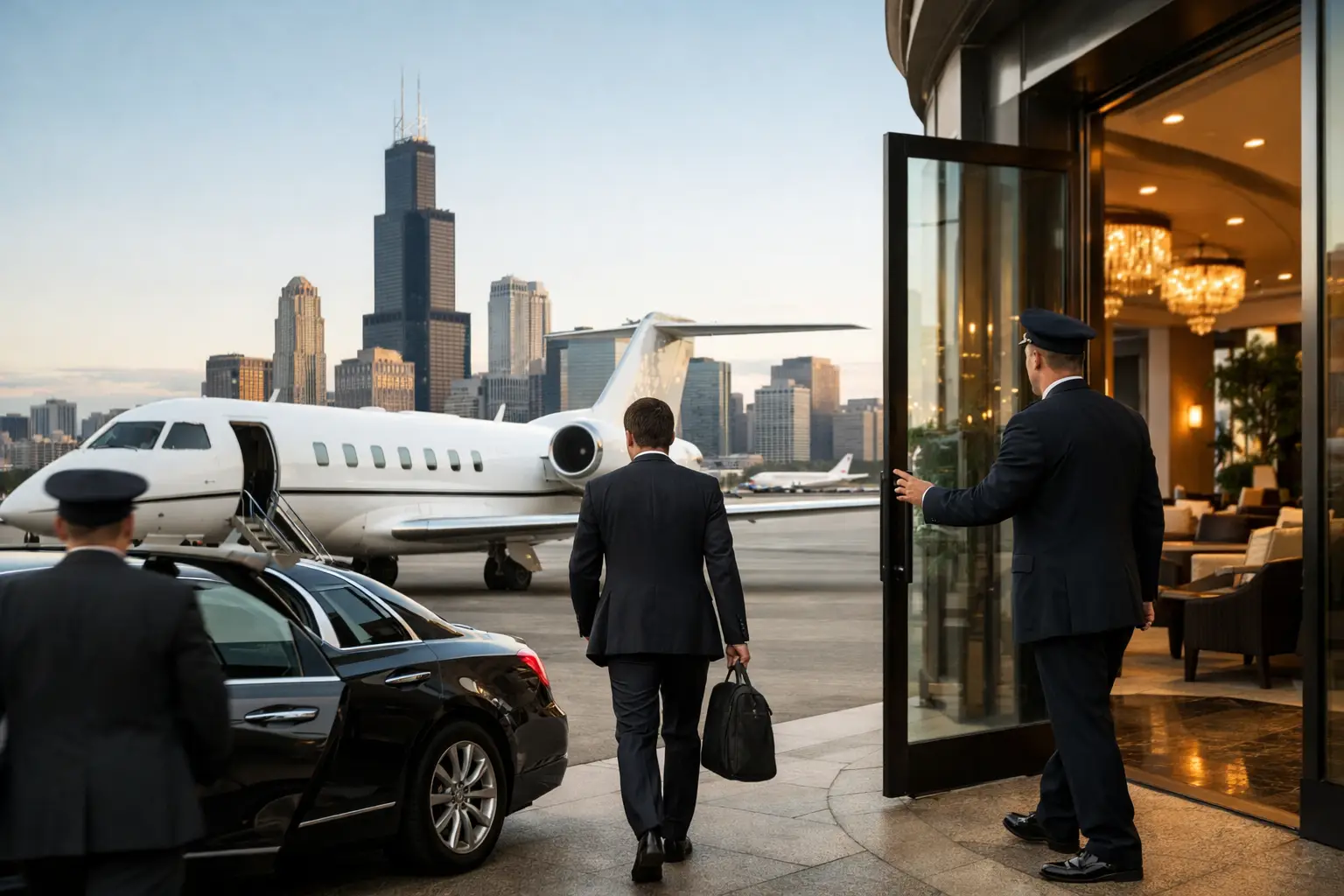
A visiting client can form an impression of a company before reaching the first meeting. A late pickup, an uncertain terminal rendezvous, or a cramped vehicle after a long flight can distract from the purpose of the day. Executive hospitality transportation treats the drive as part of the guest experience: composed, punctual, private, and carefully coordinated from reservation through arrival.
For corporate hosts, executive assistants, event planners, and families welcoming important guests, this level of service is not simply about choosing a luxury vehicle. It is about removing the small travel problems that take attention away from the people and occasions that matter.
What Executive Hospitality Transportation Should Provide
Executive hospitality transportation is private chauffeured service designed around the standards of business and VIP hosting. The vehicle matters, but so do the systems behind it: a confirmed itinerary, professional chauffeur assignment, flight monitoring, realistic luggage planning, responsive dispatch, and a clear plan for every pickup.
A polished sedan may be the right choice for one executive traveling with a carry-on. A Cadillac Escalade ESV, Lincoln Navigator L, Mercedes-Benz Sprinter van, or executive minibus may be more appropriate for a leadership team, family group, or event delegation. The best selection depends on passenger count, luggage volume, arrival sequence, and how guests will use their time in transit.
That distinction is meaningful. A transportation provider can have an impressive fleet and still create friction if the vehicle is undersized, the driver lacks complete flight details, or a group is left to coordinate multiple arrivals without a point person. Premium service is the discipline of anticipating those details early.
The Arrival Is Part of the Welcome
When guests arrive at O'Hare or Midway, their travel day may already include delays, connection changes, long walks through terminals, and unfamiliar ground logistics. A refined airport transfer should give them one less decision to make.
Flight tracking is particularly valuable for executive arrivals. It allows dispatch to adjust chauffeur timing when a flight lands early or late, rather than relying on a fixed pickup assumption that no longer matches reality. It also helps the host avoid repeatedly checking airline updates while trying to prepare for a meeting, dinner, or event.
Meet & Greet service adds another layer of assurance when the guest is unfamiliar with Chicago, traveling internationally, carrying substantial luggage, or arriving for a high-visibility occasion. Instead of searching for a pickup zone or interpreting instructions after a long flight, the guest has clear, personal guidance to the vehicle.
Privacy Has a Practical Purpose
Private ground transportation gives travelers room to prepare without the distractions of a shared shuttle or the uncertainty of a rideshare match. A professional chauffeur understands that quiet may be just as valuable as conversation. A guest may need to answer a call, review a presentation, collect their thoughts, or simply recover after travel.
For corporate hosts, discretion also protects the tone of the visit. A senior executive, prospective client, board member, or speaker should not need to manage transportation details in public or explain the destination repeatedly to an unfamiliar driver. The experience should feel assured without being intrusive.
Presentation Sets the Standard
Hospitality is communicated through details. A clean, well-appointed vehicle, a professionally dressed chauffeur, careful luggage handling, and a calm greeting tell guests that their time has been respected. These elements are not decorative. They create confidence, especially when the trip involves an important meeting, investor dinner, wedding weekend, or private event.
The appropriate level of formality depends on the guest and occasion. A single executive traveling from an Oak Brook meeting to O'Hare may prefer the understated refinement of a premium sedan. A group attending a downtown dinner or convention may need the convenience and shared arrival of a Sprinter van. Good coordination makes both choices feel intentional.
Plan the Itinerary Before Choosing the Vehicle
Vehicle selection should begin with the itinerary, not just the number of seats. Passenger capacity is only one part of the equation. Luggage, golf bags, presentation materials, strollers, formalwear, and airport transfers all affect what will be comfortable.
A common mistake is booking to the maximum stated passenger capacity. While a vehicle may legally seat a particular number of people, it may not provide the desired personal space or luggage room for an executive hospitality itinerary. If travelers have full-size suitcases, winter outerwear, or multiple airport pickups, selecting the next vehicle category up is often the more comfortable decision.
Timing deserves the same attention. A roadshow with several meetings should include reasonable buffers for loading, building access, traffic, and venue transitions. An hourly, as-directed reservation can be preferable when the schedule may change during the day. It keeps the professional chauffeur and vehicle available, rather than requiring the host to arrange separate point-to-point trips while guests are waiting.
For long-distance Midwest travel, a private chauffeur service can also be more productive than rental-car logistics or multiple rail connections. The right approach depends on distance, number of travelers, and whether guests need flexibility between destinations. For a small group traveling together, one executive SUV or Sprinter may offer a more controlled experience than coordinating individual travel.
Group Hospitality Requires One Clear Plan
Group transportation has a different set of risks than individual airport service. The concern is rarely whether a vehicle can move passengers from one place to another. The real challenge is keeping the group informed, on time, and properly matched to the vehicle plan.
For a wedding, corporate dinner, conference, sporting event, or family celebration, establish the pickup order, passenger count, and final destination before reserving. Confirm whether everyone is leaving together or whether separate return windows are needed. If guests are being picked up at multiple hotels or residences, identify a primary contact who can make decisions if timing changes.
For groups larger than an SUV can comfortably serve, a Mercedes-Benz Sprinter or executive minibus gives guests space to travel together. This is useful when the shared ride is part of the event, such as transporting a leadership team to a dinner or welcoming out-of-town family members. It also limits the risk of staggered rideshare arrivals, misplaced guests, and unnecessary calls to the host.
Chicago Executive Limousine coordinates transportation for groups of up to 30 passengers, with dispatcher-led support for complex schedules, high-demand vehicles, and special pickup requirements. That human coordination matters when an itinerary involves several flights, venues, or guest categories.
Ask the Questions That Prevent Day-Of Problems
A strong reservation process should make expectations clear before the chauffeur is dispatched. The host should provide complete flight information for airport arrivals, accurate passenger and luggage counts, pickup address details, and a reliable mobile contact. If the guest has a preferred method of communication, mobility considerations, or a specific Meet & Greet requirement, those details should be included at the time of booking.
It is also wise to clarify the service type. A flat-rate airport transfer is often the cleanest fit for a direct O'Hare or Midway trip. An hourly reservation is better when there are multiple stops, uncertain meeting end times, or a vehicle must remain available. Event transportation may require a separate departure plan, especially if guests will leave at different times.
Transparent pricing and confirmed reservation details protect both the host and the guest. They reduce misunderstandings around waiting time, vehicle category, pickup procedures, and itinerary changes. A secure booking flow is useful for straightforward reservations, while direct dispatcher coordination is often the better choice for larger groups and more involved plans.
Why Professional Chauffeurs Matter
A professional chauffeur does more than operate a premium vehicle. They represent the standard of the host. That requires punctuality, route awareness, discretion, attentive driving, and the judgment to handle changing conditions without creating unnecessary concern for the passenger.
Chicago traffic, weather, construction, and airport congestion can change a well-planned schedule. No provider can eliminate every variable. The difference is how those variables are managed. A prepared chauffeur and 24/7 dispatch team can communicate clearly, adjust to a revised arrival time, and keep the guest moving with minimal disruption.
For executive hospitality, reliability is often more valuable than spectacle. Guests remember whether they felt expected, comfortable, and properly looked after. When the transportation plan is handled with care, the host is free to focus on the conversation, celebration, or business opportunity waiting at the destination.
The most effective hospitality is rarely loud. It appears in the right vehicle at the right time, a courteous chauffeur who already knows the plan, and an arrival that allows every guest to step out ready for what comes next.