From the Blog
Sedan Versus SUV Chauffeur: Which One Fits?
Choosing a sedan versus SUV chauffeur service in Chicago? Compare privacy, luggage capacity, passenger comfort, and the right fit for your itinerary.
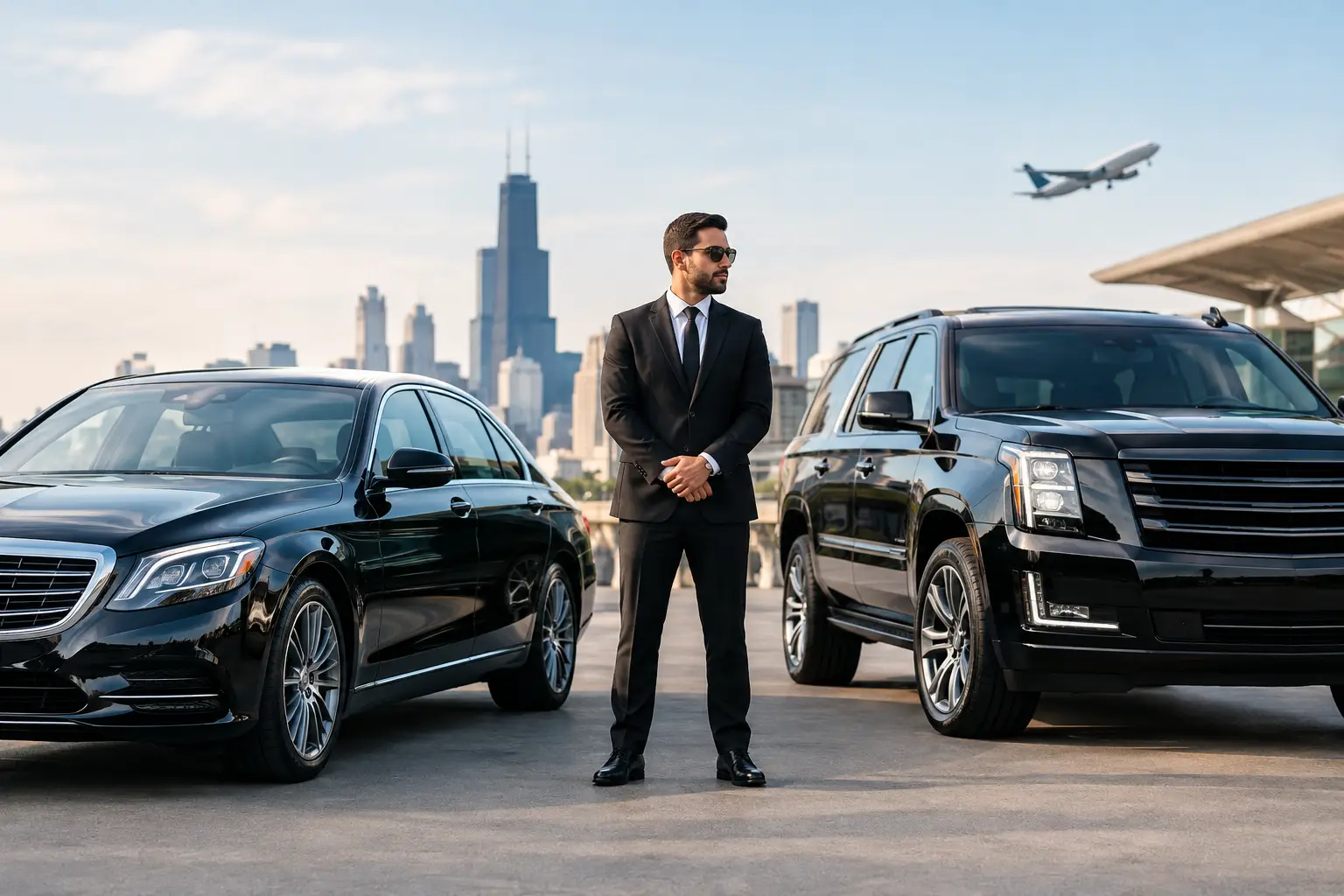
A sedan versus SUV chauffeur decision usually comes down to one detail that is easy to overlook when reserving transportation: what must comfortably travel with you. The right vehicle is not simply a matter of appearance. Passenger count, luggage, airport terminals, meeting schedules, winter conditions, and the desired level of privacy all shape the experience.
For an executive traveling alone from O'Hare to a Loop hotel, a refined sedan may be the natural choice. For a family returning with several checked bags, an SUV often makes more sense before the chauffeur ever pulls up to the terminal. Selecting correctly in advance helps preserve the calm, composed arrival that private transportation is meant to provide.
Sedan Versus SUV Chauffeur Service at a Glance
Both vehicle types deliver professional chauffeured transportation, but they serve different travel profiles. An executive sedan is designed around personal space, discretion, and a polished business-ready arrival. A premium full-size SUV adds passenger room, a higher seating position, and substantially more flexibility for luggage.
Neither is automatically the superior option. A sedan can feel more private and focused for one or two travelers, particularly when the itinerary includes client meetings, a downtown dinner, or a direct airport transfer. An SUV can be the more practical choice for three or more passengers, travelers with large suitcases, or guests who prefer more room to enter and exit comfortably.
The reservation should reflect the entire trip, not just the number of people at pickup. A two-passenger airport ride with four large checked bags has very different space requirements than a two-passenger evening transfer with only briefcases.
When an Executive Sedan Is the Right Choice
A premium sedan provides a quiet, refined cabin that suits business travel especially well. It is an excellent fit for one or two executives traveling between O'Hare, Midway, private aviation terminals, offices, hotels, and residences. The 2026 BMW 740i xDrive, for example, presents a poised and professional setting for travelers who value a smooth ride and discreet presentation.
Sedans work particularly well when luggage is limited. A typical arrangement is one or two passengers with carry-ons, garment bags, or a modest amount of checked luggage. Before confirming a sedan, consider not only suitcase count but size. Two compact rollers occupy far less trunk space than two oversized hard-shell cases.
For corporate transportation, the sedan's advantage is its sense of focus. A traveler can make a call, review a presentation, or simply take a quiet moment between a flight and a meeting. It also arrives with an understated executive profile that suits board meetings, client lunches, and hotel transfers in the Loop, River North, or Oak Brook.
A sedan may also be the preferred choice for an individual arriving by private aircraft. When the FBO confirms the aircraft's timing and the traveler has limited baggage, a chauffeur can coordinate directly with the FBO team for an efficient departure from the facility. Where access is permitted, planeside coordination may be arranged according to airport and FBO procedures.
Sedan considerations to address before booking
The key trade-off is cargo space. Sedans provide a premium passenger experience, but their trunks are not designed for a full family airport load, golf equipment, multiple presentation cases, or extended-trip luggage. If there is any uncertainty about whether bags will fit, choosing the larger vehicle prevents an uncomfortable or impractical pickup.
Sedans also are best reserved for smaller parties. While a rear seat can accommodate more than two people in some circumstances, comfort and personal space change quickly. For a first-class experience, many travelers prefer to limit sedan reservations to one or two passengers.
When a Chauffeured SUV Makes More Sense
A full-size SUV is built for flexibility without giving up executive presentation. Vehicles such as the Cadillac Escalade ESV and Lincoln Navigator L offer generous room for passengers and luggage, making them especially appropriate for airport arrivals, family travel, executive teams, and longer trips across the Midwest.
For O'Hare and Midway transfers, the SUV is often the most practical choice when travelers are carrying several checked bags. Its cargo area can accommodate more luggage than a sedan, while the cabin gives passengers room to settle in after a flight. That matters after a late arrival, a long international itinerary, or a winter trip when coats, boots, and additional bags take up more space than expected.
An SUV is also well suited to executive hospitality. If a company is receiving visiting leadership, clients, or several colleagues on the same flight, keeping the party together can simplify the arrival process. The chauffeur can meet guests inside the terminal when Meet & Greet is requested, assist with the transition to the vehicle, and proceed once the entire party is accounted for.
The elevated seating position is another consideration. Some passengers simply find an SUV more comfortable to enter, particularly when traveling with children, older relatives, or formal event attire. For a wedding party transfer or a special evening out, that extra ease can be meaningful.
SUV considerations to address before booking
More capacity does not mean unlimited capacity. A full-size SUV has generous space, but passenger count and luggage still need to be evaluated together. Five travelers with large suitcases may require a different solution than five travelers with carry-ons. For larger parties, a Mercedes Sprinter van or executive minibus may be the better operational choice.
An SUV can also feel less intimate than a sedan for a solo traveler who wants a compact, quiet environment. For a single executive traveling light, the additional space may not add value. The goal is not to reserve the largest vehicle available. It is to reserve the vehicle that matches the occasion precisely.
Choosing for Chicago Airport Transfers
Airport transportation creates the most frequent sedan-versus-SUV question because luggage and flight timing are both variables. The best starting point is to provide the flight number, airline, arrival airport, passenger count, and realistic baggage count during reservation. This gives dispatch the information needed to assign the appropriate vehicle and monitor the flight.
For one or two travelers with typical business luggage, an executive sedan is often a polished fit. For families, groups of colleagues, or travelers returning from a longer trip, an SUV usually provides more comfortable capacity. A traveler arriving at O'Hare from an overseas flight may have more baggage than on a same-day domestic trip, so the itinerary itself matters.
Timing matters just as much as vehicle size. A professional chauffeur service tracks scheduled flight activity and adjusts for delays when flight information is provided. For terminal Meet & Greet, clear instructions around the airline, terminal, and preferred contact number help the chauffeur and dispatch team coordinate the handoff with care.
Private aviation requires the same level of detail, with additional coordination around the FBO. At Chicago Executive Airport, DuPage Airport, O'Hare, or Midway FBOs, the chauffeur's timing can be aligned with the flight crew and FBO staff. A sedan may be ideal for a single principal traveling with a light load, while an SUV offers better capacity for multiple travelers or additional aircraft baggage.
Consider the Purpose of the Ride, Not Only the Route
The route may be identical, but the purpose can change the best vehicle. A sedan is an excellent choice for an executive heading from a North Shore residence to a meeting downtown. An SUV may be better for the same route if the traveler is bringing colleagues, samples, display materials, or airport luggage.
For weddings and special events, the choice often depends on clothing, timing, and who is riding together. A sedan offers a refined departure for a couple or individual, while an SUV accommodates close family members, attendants, or extra items more comfortably. If the group is larger, it is better to plan a Sprinter or executive minibus from the outset than to ask an SUV to do a vehicle's worth of work it was not designed to handle.
For long-distance transportation to Milwaukee, Madison, South Bend, or elsewhere in the region, passenger comfort becomes more important over time. A sedan is well suited to a quiet one- or two-person trip. An SUV is often preferable when passengers want additional room to stretch out, travel with luggage, or share the ride without feeling crowded.
Give Dispatch the Details That Change the Vehicle Choice
A precise reservation avoids the most common vehicle mismatch. Share the number of passengers, luggage pieces and approximate size, flight information when applicable, child seats or mobility needs, and any intermediate stops. If the trip includes a special event, mention formalwear, gifts, equipment, or other items that take space.
For complex itineraries, hourly service, group movements, and multi-stop corporate travel, speaking directly with dispatch is worthwhile. Chicago Executive Limousine can help match the itinerary to a sedan, SUV, Sprinter, or larger vehicle based on how the day will actually unfold, not a generic estimate.
The best choice should feel effortless once the vehicle arrives. Reserve a sedan when privacy, understated executive style, and light luggage define the trip. Reserve an SUV when extra passengers, larger bags, or added flexibility deserve more room. A few accurate details at booking turn that decision into a composed arrival rather than a last-minute accommodation.